Fit-for-purpose drilling method
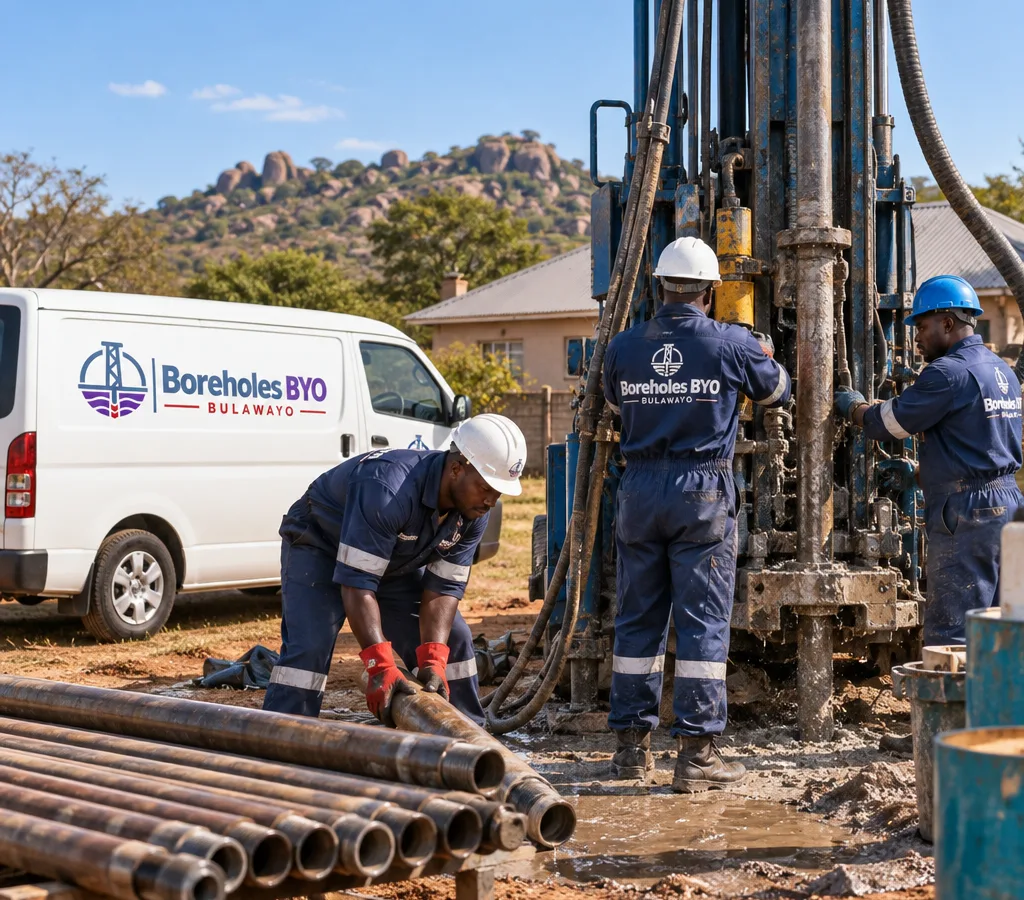
Deep Borehole drilling in Bulawayo often involves hard formations, so the drilling approach, bit selection, and circulation management must suit rock conditions and target diameter.
Serving Bulawayo, Bulawayo Province & surrounding areas
Mon–Fri 8am–6pm · Sat 9am–2pm
Deep borehole service · Bulawayo
When water levels drop or demand increases, deeper drilling can restore yield and protect your supply. Get a clear, site-specific plan before any drilling starts.
Depth planned around real demand
Bulawayo Deep borehole drilling is usually needed when an existing hole no longer meets demand, when seasonal drawdown reduces yield, or when you want to reach a more dependable water-bearing fracture in hard rock. In Bulawayo Province, boreholes commonly intersect groundwater in fractured bedrock rather than thick, uniform sand aquifers, so depth choice and drilling method matter.
Boreholes BYO handles deep borehole drilling and specialist deepening work for homes, flats, schools, and small businesses, with borehole drilling specialists serving Bulawayo keeping the focus practical: assess what you have, confirm the risks, and drill to a depth that makes sense for your site and pump needs.
Assess before extending the hole
Deepening borehole services in Bulawayo make sense when the casing is in workable condition and the existing borehole alignment is sound. If your water level has dropped or the borehole starts to run dry under heavy use, deepening can reach additional fractures and increase available drawdown, which helps the pump run without sucking air.
We typically start by checking what is already there: approximate current depth, casing diameter, pump set depth, and whether there are signs of collapse or heavy silt. Deepening borehole drilling is not simply “drill more metres”. The method needs to protect the existing casing, manage cuttings properly, and avoid bridging or wall collapse.
You will get a practical recommendation: deepening, cleaning and test pumping, or re-drilling if the existing hole is too compromised to safely extend.
Specialist deep-drilling scope
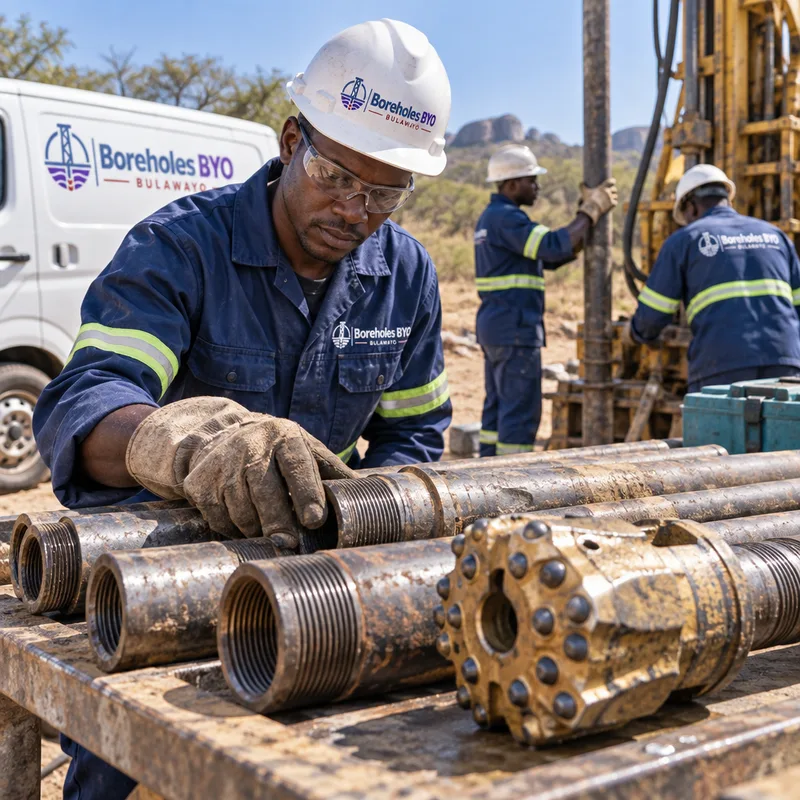
Deep Borehole drilling in Bulawayo often involves hard formations, so the drilling approach, bit selection, and circulation management must suit rock conditions and target diameter.
Before any deepening, the borehole collar and casing condition should be assessed to reduce the chance of sticking tools or losing the hole.
A deep borehole is only useful if it supports stable pumping. Test pumping and basic yield checks confirm whether the depth and fractures reached match your demand.
Deepening changes the safe pump setting. We plan for drawdown, cable and pipe length, and keeping the pump off the bottom to avoid sediment ingestion.
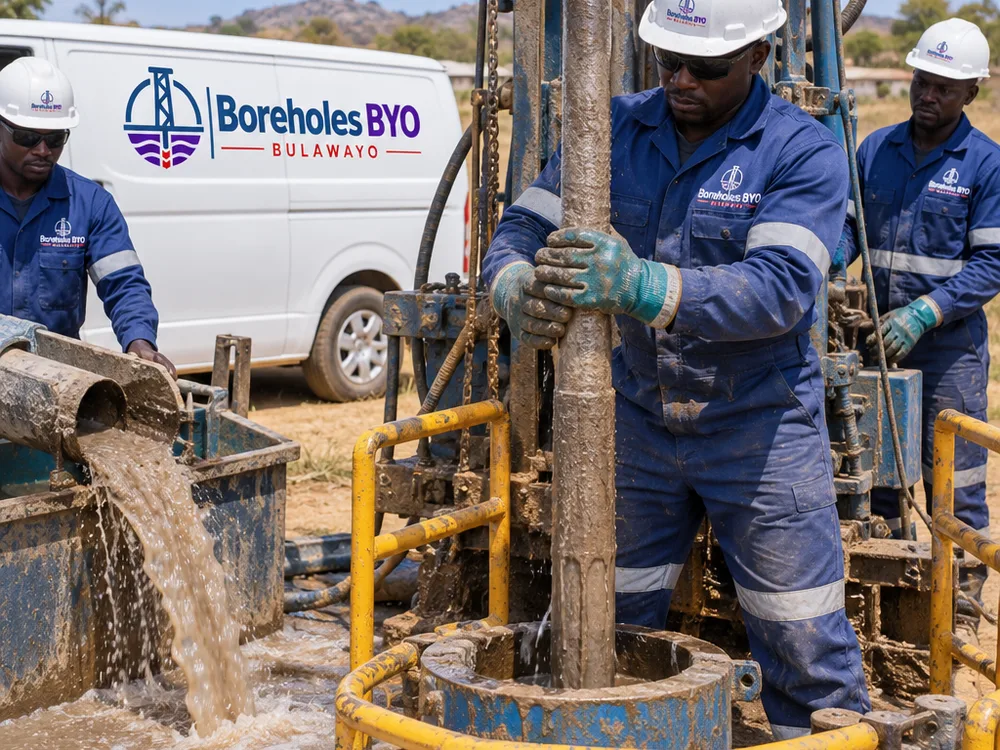
After drilling, flushing and development help remove fine cuttings so the borehole runs clearer and the pump is less likely to clog.
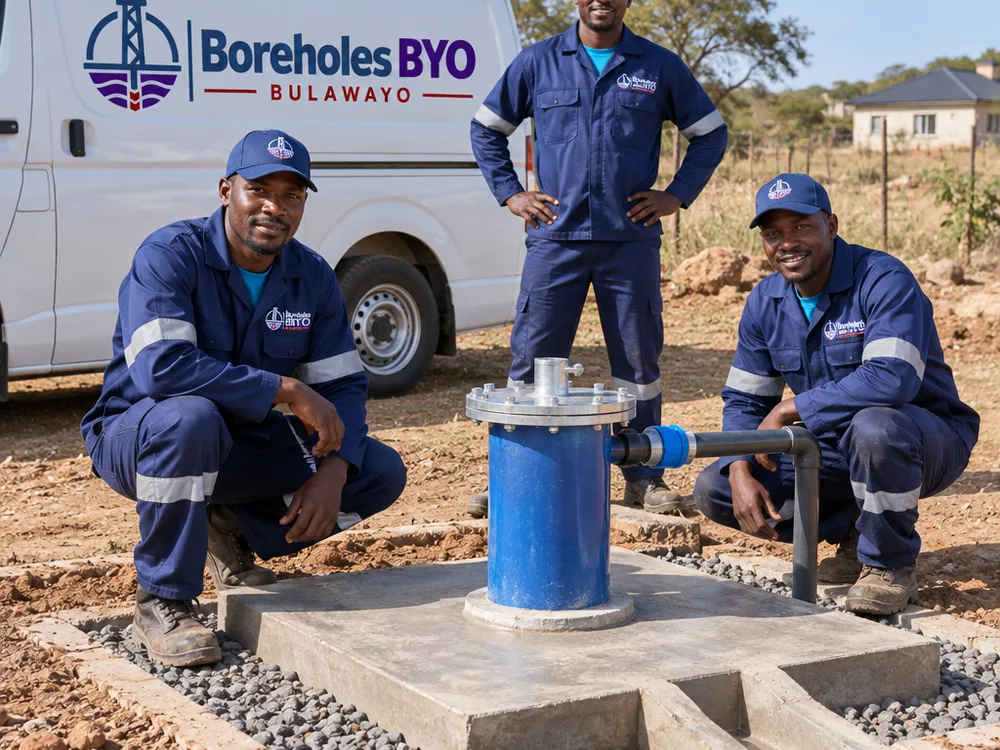
You should receive straightforward notes on depth, diameter, recommended pump set depth, and any limits observed, such as unstable zones or heavy fines.
Local ground and access conditions
Deep borehole services are rarely one-size-fits-all across a city. In neighbourhoods like Hillside, Burnside, and Ilanda, sites can vary lot to lot in elevation and underlying rock, which affects where fractures occur and how the borehole behaves under pumping. In the CBD and industrial areas where water demand is more constant through the day, the right depth and pump setting matter even more because long run-times can expose low-yield holes quickly.
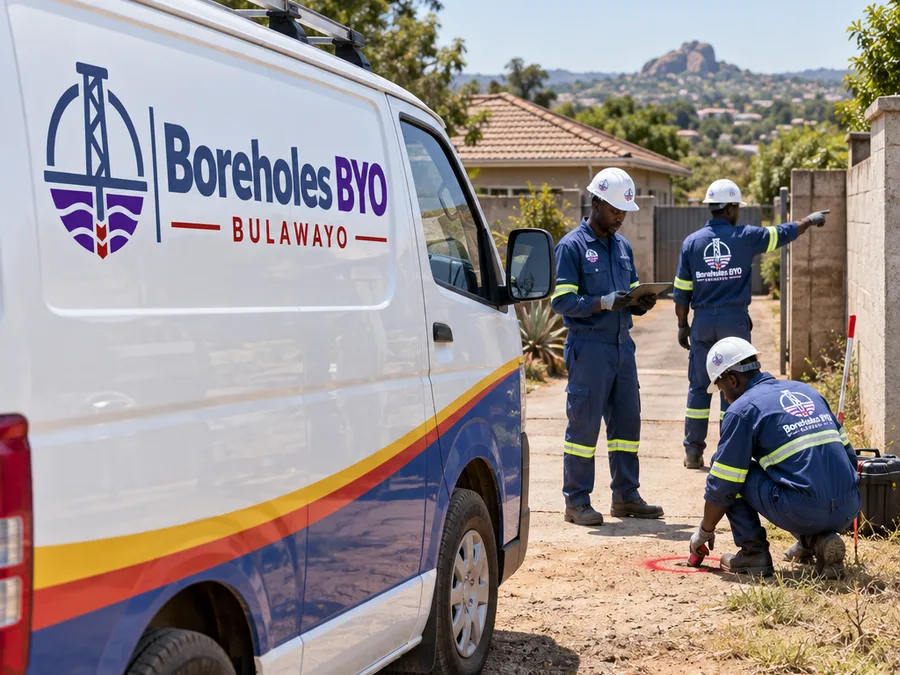
Across Bulawayo, access is also a practical factor. Tight driveways, boundary walls, and overhead lines can restrict rig placement, rod handling, and water return management. We plan for that early so the drilling setup, safety perimeter, and spoil handling are sensible on your stand.
From assessment to pump guidance
We confirm what you need the water for, the current borehole performance, and any known details such as depth, casing size, and pump history.
We position the rig for stable drilling, set up a controlled work zone, and plan return flow and cuttings handling to keep the stand workable.
For new deep holes we drill to the planned diameter and depth. For deepening borehole drilling we work through the existing collar and casing carefully and extend into the target zone.
We flush cuttings and fine material, then develop the hole so water runs clearer and the borehole is ready for reliable pumping.
We provide practical guidance on pump set depth based on observed water levels and the drilled depth, so you can match the installation to the borehole.
Site-specific deep-drilling pricing
Bulawayo deep borehole drilling typically ranges from about USD $1,500 to $6,000+, depending on drilling depth, ground conditions, and diameter. Deepening an existing borehole is often lower than a full new borehole when the casing and alignment are usable, while very deep or large-diameter work sits at the upper end.
Final pricing changes with access for the rig, how hard the formation is, how much casing is required, flushing and development time, and whether the existing hole needs rehabilitation before deepening. The exact cost is confirmed after an on-site assessment and a written scope.
Fieldwork and finished details
Answers before drilling starts
Deepening is a good option when the existing borehole is structurally sound and the casing diameter suits your pump needs. If the hole shows collapse, severe siltation that cannot be cleared, or an unsuitable diameter, a new borehole is often the safer long-term choice after assessment.
Deepening depth depends on the existing diameter, casing condition, and how stable the formation is below the current end of hole. A site assessment determines whether tools can safely pass, whether the hole can be kept open, and what depth target is realistic for your water demand.
Common causes include lowering of the water table during dry periods, increased local abstraction, pump set too high for the available drawdown, and fines or silt clogging the water entry zones. Deep borehole services often solve this by reaching additional fractures and then properly developing the hole so it runs cleaner.
Yes, the pump and rising main must be removed before any deepening work. This protects the equipment from damage and allows proper access to the borehole for tools, flushing, and checking casing integrity.
Most drilling and deepening work runs over several days, but the exact timeline depends on depth, formation hardness, access, and how much flushing and development is needed afterward. Once we review your site and scope, we can give a realistic schedule for drilling plus handover readiness.
Ask how they will confirm casing condition for deepening, what drilling method they will use for hard rock, how they manage cuttings and return water on a stand, and what handover information you will receive, including final depth, recommended pump set depth, and any limitations observed. This is also a good time to confirm whether borehole cleaning is included or treated as a separate item.
Share what you are seeing on site—current depth, pump issues, and water demand—and we will advise whether deepening or a new deep borehole is the better path, then provide a written scope before drilling begins.